Real Estate Hashtags: Pick a Set for Each Kind of Post
Real estate hashtags work best when they describe the post and place. Use these practical sets for listing news, market updates and community posts.
By Realtor Marketing Kit by Cosmo Suite · Editorial policy
Published · 8 min read

The listing is live, the photo is ready, and the caption is almost done. Then comes the familiar question: which hashtags belong under it? The answer depends on what the post says. A just-listed announcement, a market note and a neighborhood recommendation each need a different set.
Use hashtags as labels for the post's subject and place. They do not replace a clear caption, a good photograph or the location information itself. Instagram's Help Center says you can use up to five tags on a post, checked 15 October 2026. Other platforms set their own rules, so check before publishing. The examples below use fewer tags and adapt them by post type. If choosing the design is part of the delay, editable real estate post templates give you a starting layout for each kind of announcement.
The Short Version
- Choose tags that describe this post, not every service you offer.
- Mix the subject with a city or neighborhood when location matters.
- Keep a few recurring business tags, then change the rest by post type.
- Check the platform's current limit before publishing. Hashtags do not promise reach or leads.
Why Hashtags Need a Job
A real estate hashtag is a word or phrase preceded by # that labels a social post's subject or place. If it could sit under every photo in your feed, it may be too broad to help someone understand this one.
Most hashtag roundups hand you a long block to paste. Zillow's guide to Instagram for real estate names broad tags such as #realestate and #homeforsale, then advises agents to mix popularity with relevance. HousingWire's 2025 article collects 112 suggestions. Use those lists to find wording. The number of tags in a roundup does not decide which ones belong in your caption. The HousingWire count is a tag bank, not today's platform limit.
Think of a tag as a filing label, not a promise of distribution. A person seeing #openhouse can infer the subject. A local tag can identify the market. A tag that has little to do with the photo or caption gives the reader less context, even if it appears on a large list.
That distinction matters because the caption should make sense on its own. Start with the address area, the useful detail or the local question. Add hashtags after you know what the post is saying. If you're deciding what to publish across a listing's timeline, this stage-by-stage guide to real estate social media posts maps the post types to the moment they fit.
A Working Hashtag Set by Post Type
Use the table as a set of examples, not a universal ranking. Replace every bracketed place with the name people in your market actually use. Skip any tag that does not fit the property or the caption.
| Post type | Subject tag | Place tag | Optional detail | Example group |
|---|---|---|---|---|
| Just listed | #JustListed |
#[City]RealEstate |
A real feature, such as #RanchHome |
#JustListed #[City]RealEstate #RanchHome |
| Open house | #OpenHouse |
#[Neighborhood]Homes |
#HomeForSale when accurate |
#OpenHouse #[Neighborhood]Homes #HomeForSale |
| Market update | #LocalMarketUpdate |
#[City]HousingMarket |
A named district, if the figures cover it | #LocalMarketUpdate #[City]HousingMarket #[District] |
| Just sold | #JustSold |
#[City]RealEstate |
#HomeSale if it fits the post |
#JustSold #[City]RealEstate #HomeSale |
| Buyer or seller tip | #HomeBuyingTips or #HomeSellingTips |
#[City]RealEstate |
A narrower subject, such as #FirstTimeBuyer |
#HomeBuyingTips #[City]RealEstate #FirstTimeBuyer |
| Community note | #Around[City] |
#[Neighborhood] |
The actual local subject, such as #FarmersMarket |
#Around[City] #[Neighborhood] #FarmersMarket |
[Unique insight] Each row starts with the post's job. That makes the first tag change when the post changes, while the place tag can stay if the post is still about the same market. You can keep a small local list without pasting one identical block under everything.
Listing Posts: Match the Tag to the Announcement
A listing announcement should identify the status and place before it adds a feature tag. For a just-listed post, use a status tag, a local market tag and one property feature that appears in the listing details. For an open house, use an event tag and a place tag. If the listing is under contract or sold, update the status instead of leaving #JustListed in the caption.
For example, a fictional caption might say: “Just listed near Oak Hill: a brick ranch with a screened porch. Message me for the details.” A fitting group could be #JustListed #OakHillHomes #RanchHome. Change the location and feature to match the actual property. Do not add a style, amenity or status that the listing does not support.
The image and caption do more of the explaining than the tags. Keep the key status, neighborhood and next step in readable text. If someone sees the photo without opening the tag page, they should still know what is being announced. Ask the seller before sharing property images or personal details, and follow your broker's and MLS's marketing rules.
An open-house plan for real estate agents can help you schedule the invite, reminder and follow-up. The matching tags are a small finishing step after the timing and details are settled.
Market Updates: Name the Area Behind the Number
A market update needs a defined area and period. A tag such as #LocalMarketUpdate tells the reader the post is a market note; a city or district tag gives it a place. If you include a statistic, say where it came from and what area and date it covers in the caption or image.
Avoid a generic tag that makes a local figure sound national. “Median days on market in [area] in [month], according to [local MLS report]” tells the reader more than “The market is moving fast.” Do not use #HousingMarket as cover for a number pulled from a different county or period.
If you are sharing a forecast or opinion, label it as such. Hashtags cannot fix an unclear source or an overconfident claim. A clean market update can use two or three accurate tags, with the rest of the caption doing the work of explaining the number.
Just Sold and Client Milestones: Keep the Claim True
A just-sold post can use #JustSold and a local tag if the place is public and the client is comfortable with the post. The status is the subject. A neighborhood or city tag adds context. A third tag is optional if it describes something visible or named in the post.
Do not add a sale price, days-on-market claim or client detail just to create another tag opportunity. Confirm the information is accurate and that you have permission to share any identifying details. If the client prefers privacy, a general thank-you can still mark the milestone without naming them or the address. The National Association of Realtors' fair housing guidance is a useful check when describing a property or audience; ask your broker about the rules that apply to your post.
The same restraint applies to a quote or testimonial. Only post words the client actually approved, and follow your brokerage's rules for endorsements. A tag does not make a claim more reliable.
Community Posts: Use the Place People Recognize
A community post can point to a park, local business, street fair or seasonal event. Use the place name residents use and a subject tag that matches the image. If you share a business, check its correct name and ask before implying a partnership.
For example, a post about the Saturday market might use #SaturdayMarket #[NeighborhoodName] #ShopLocal. Put the market's name and date in the caption so the post remains clear without hashtags. For a neighborhood photo, a city-level tag may be enough; adding several nearby towns can make the post look like it covers a wider area than it does.
Zillow's Instagram guide for agents also suggests mixing listing content with neighborhood and useful local material. The practical point is simple: choose a subject you can stand behind and make the post useful to someone who knows the area. Do not use a community tag to imply that an event, business or resident endorses your services.
Build a Small Reusable List, Then Edit It
Keep your working list in three groups: business identity, places you actually serve and post subjects. The business group might include your brokerage-approved name tag. The place group can hold the city and neighborhoods you cover. The subject group can include listing, open-house, market-update and client-tip tags.
Before each post, use this quick check:
- Name the post's job. Is this a listing announcement, event invite, market note, milestone or local tip?
- Choose the place. Use a city or neighborhood that accurately describes the content.
- Add one detail if it earns its space. It might be a property style, event or buyer topic that is visible in the post.
- Check the platform and caption. Follow the current hashtag limit and remove tags that do not match the words or image.
Use this as an editing routine. Save the tags that make each post easier to understand. Replace the subject tags when the post changes. Review your own platform insights over time, but do not treat one post's reach as proof that a tag caused it. A weekly content calendar and ready-made post designs can help you keep the captions and visuals organized by listing stage.
Where Realtor Marketing Kit Fits
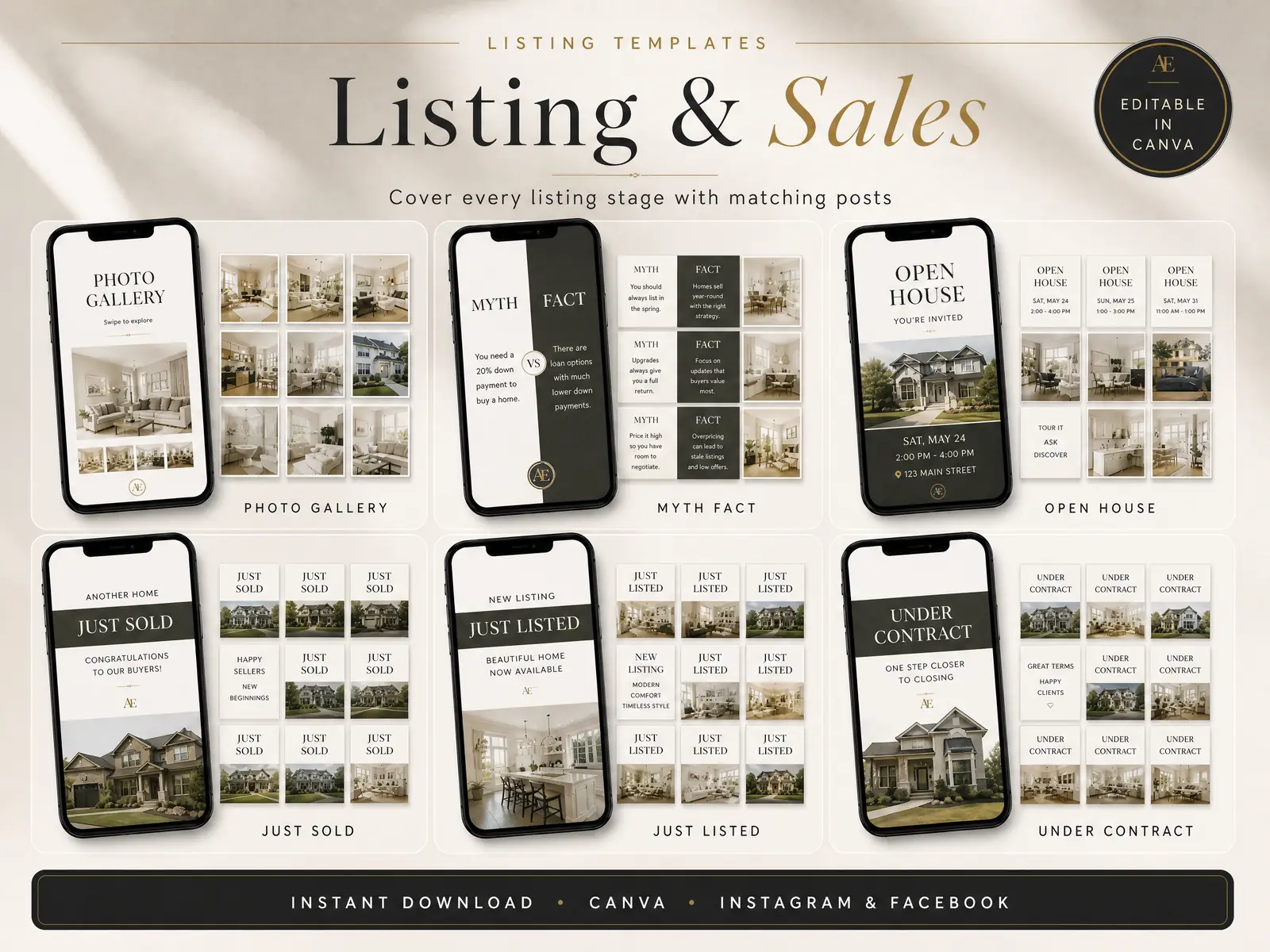
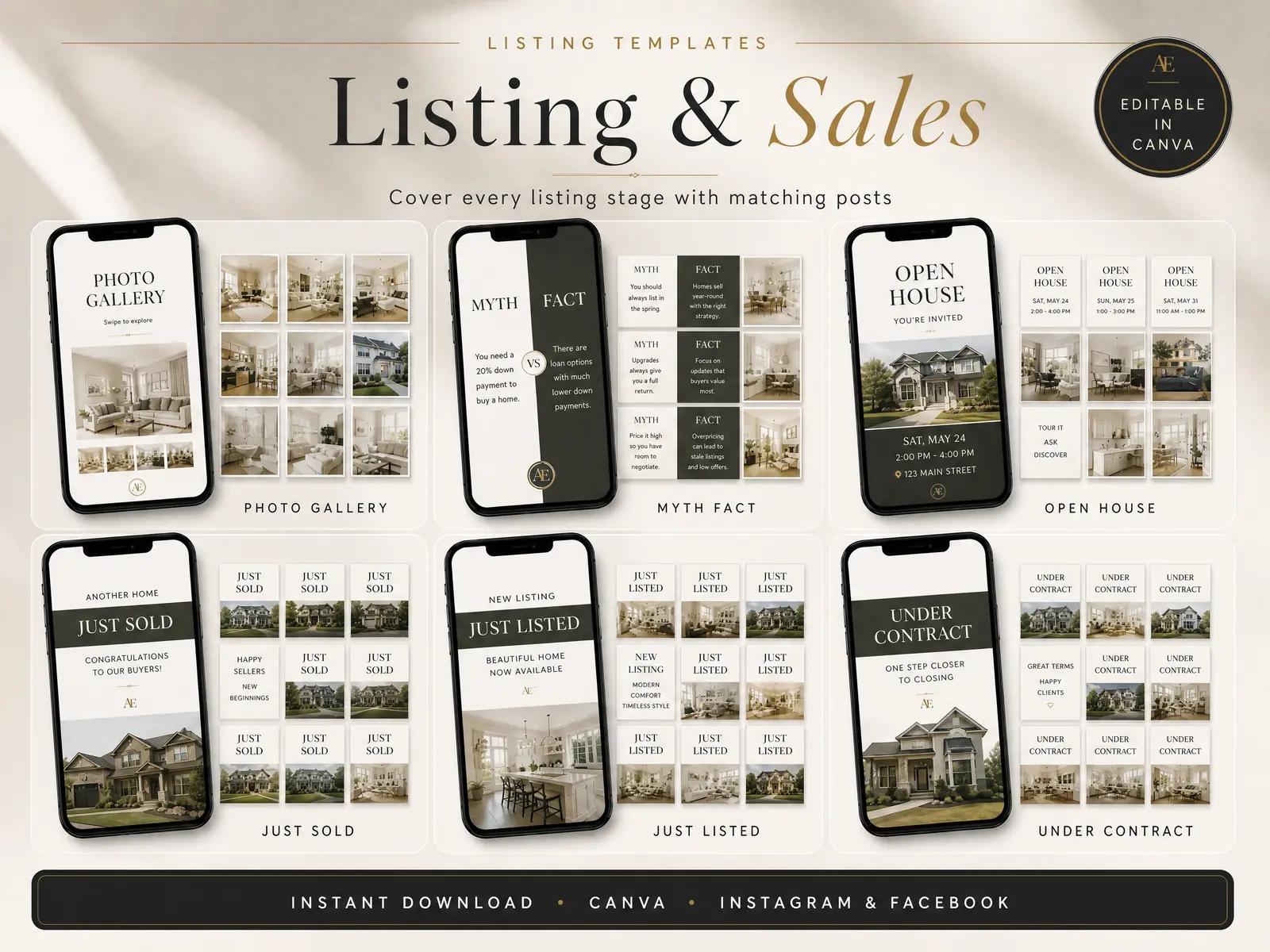
The hard part is often deciding what the post should say before you format it. Realtor Marketing Kit groups editable designs around listing, sales, educational and personal-brand post types, so you can pick a design that matches the caption you are writing.
The kit includes just-listed, open-house and just-sold designs, market updates, buyer and seller tips, community posts, and a weekly content calendar. The designs open in a free Canva account. You add your own property photo, local details and approved brand information. It does not choose hashtags, publish posts, schedule them or promise that a post will reach a certain audience. If ready-made designs would help with the visual part, see Realtor Marketing Kit. Canva is a trademark of Canva Pty Ltd; Instagram and Facebook are trademarks of Meta Platforms, Inc. Realtor Marketing Kit is not affiliated with or endorsed by Canva or Meta.

Why Trust This Article
Cosmo Suite makes Realtor Marketing Kit, shown in the screenshots. We organized the examples by the post types agents already use: listing news, market updates, milestones and community notes. The examples are editorial suggestions, not a measured hashtag test. Zillow's Instagram guide, HousingWire's 2025 list and the Instagram Help Center informed the examples; we checked them on 15 October 2026. We do not claim that a hashtag will increase reach or generate business. Platform features and limits change, so check the current publishing screen and your broker's rules before posting. Read about us, see our editorial policy, or contact us with a correction.
Frequently asked questions
What are the top 10 hashtags for real estate?
There is no top ten that fits every agent or post. Start with the subject, add the city or neighborhood, then choose one property or audience detail if it fits. A listing post and a local market update need different tags.
How many hashtags should a real estate agent use?
Instagram currently allows up to five tags on a post, according to its Help Center checked on 15 October 2026. Use only tags that describe the post, and check the publishing screen because platform limits and guidance can change.
Should realtors use local hashtags?
A city or neighborhood tag can make the place clear when that location is central to the post. Use the spelling people in your market recognize, and put the location in the caption too.
Do hashtags get real estate posts more views?
Hashtags can label a post and help people find related posts, but they do not guarantee reach, leads or a sale. Write the caption for the person reading it, then use a few accurate tags as context.
Should I use the same real estate hashtags on every post?
Keep a short list of useful local and business tags, then choose the rest for that specific post. A just-listed caption, a market update and a neighborhood note have different subjects.