Real Estate Sphere of Influence: A List You Can Build This Week
Real estate sphere of influence: build a useful contact list, sort it by relationship, and plan a monthly touch that gives people a reason to hear from you.
By Realtor Marketing Kit by Cosmo Suite · Editorial policy
Published · 8 min read

You finish a closing, put the keys away, and mean to keep in touch. Then the next listing takes over the week. Months later, you remember the client when a home anniversary has already passed.
A real estate sphere of influence plan helps you keep those relationships visible. Start with people you already know, write down how you know them, and choose a simple reason to reach out. You can build a first version this week without a new CRM or a complicated campaign.
The Short Version
- Begin with people you know, then add a note about the relationship and a sensible next touch.
- Sort contacts by how you know them and what they may find useful, not by how likely they are to transact.
- Use one monthly theme to make outreach easier, while keeping personal conversations personal.
- A sphere list is not permission to contact people through every channel. Follow your brokerage's rules and respect each person's preferences.
What Is a Real Estate Sphere of Influence?
A real estate sphere of influence is the network of people connected to you through personal, work, community, and client relationships. The Vulcan7 overview of sphere marketing describes it as a person's existing personal and professional network. The MoxiWorks Q3 2024 CRM guide likewise treats the sphere as contacts an agent already knows.
The connection behind each name is more useful than the total. Someone belongs on your working list because you know them and have a respectful reason to keep in touch. A person's presence in your phone does not tell you what they agreed to receive, which channel they prefer, or whether a real estate message would be welcome.
The list can include relatives, friends, former colleagues, neighbors, local business owners you know, community contacts, current clients, and past clients. A person may fit more than one group. A relationship category is a label for how you know someone. Record it in plain language so your next message sounds like it came from you.
If you're trying to make your client communications more consistent, a ready-made real estate marketing kit can help with the posts and email materials around that work. It does not store contacts or manage follow-up.
How Do You Build the List This Week?
Build the first version in short passes. Start with names you can recall, check the places where you already keep contact details, then add a relationship note and one next step. Keep this list for people you know; unfamiliar names belong in a separate outreach process.
| Pass | What to do | Example note |
|---|---|---|
| Recall | Write down people you know from family, work, school, neighborhood, community, and real estate | “Former colleague; moved to the area last year” |
| Review | Check your phone and email contacts for people you missed | “Past client; prefers email” |
| Group | Add a simple relationship category | “Community group” |
| Personalize | Note a real detail that helps you remember the person | “Asked about local trail access” |
| Choose | Write one appropriate next touch, or leave it blank | “Send the neighborhood event link if it is still current” |
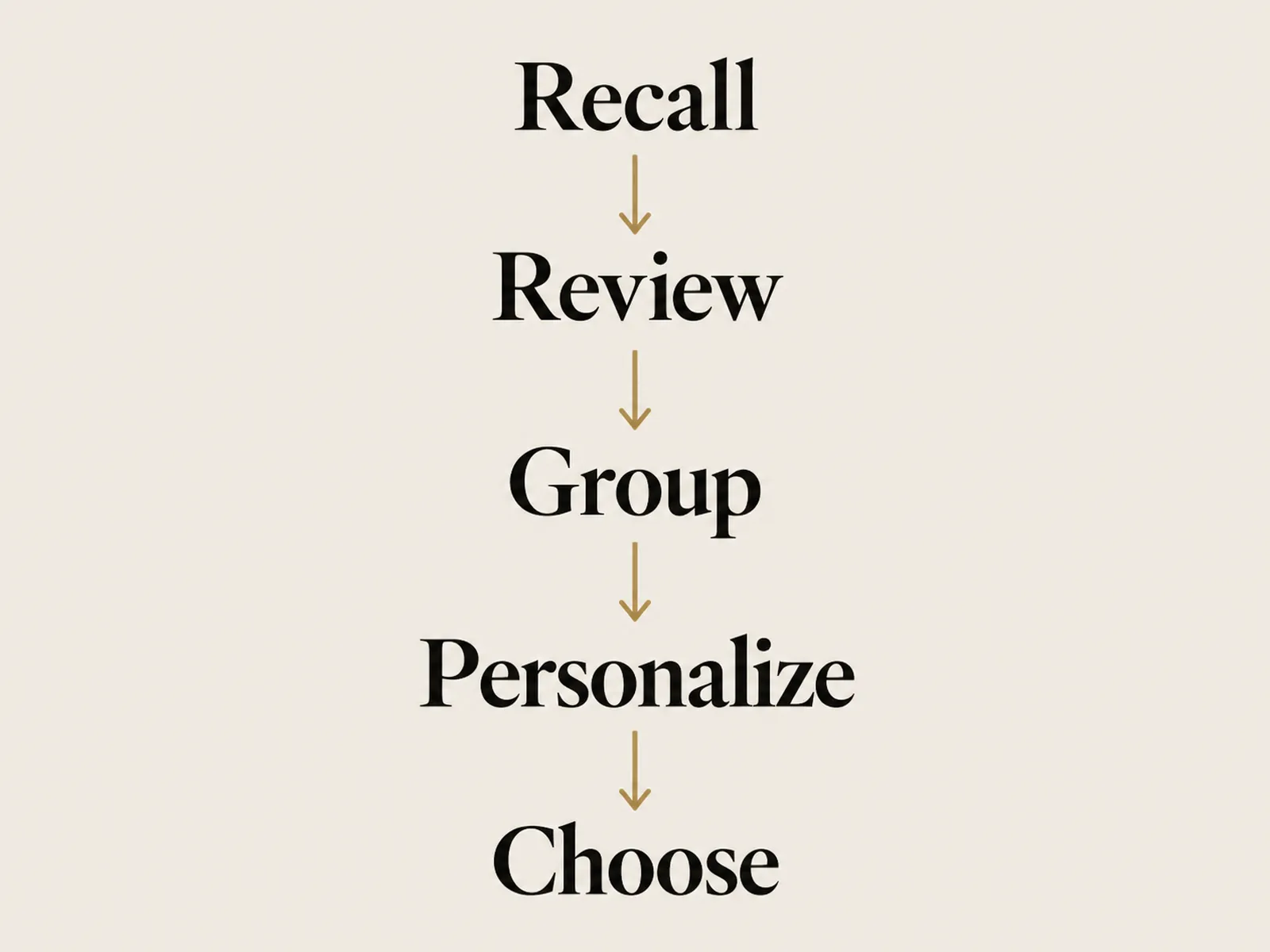
Keep the first pass small enough to finish. A list of names with no context is hard to use. A smaller list with accurate notes gives you a better starting point for thoughtful contact.
Do not add private details you would not need for a professional relationship. Keep your records in the system your brokerage approves, and check its guidance before importing contacts or sending bulk messages. This is a planning exercise, not legal advice about marketing consent.
Who Belongs in Each Group?
Use relationship groups to write a fitting message. Treat them as working labels, rather than rankings of who might buy or sell.
People you know personally
Family, friends, former classmates, neighbors, and people from clubs or community groups may know you as a person before they know you as an agent. A broad “just checking if you need to move” message can make the relationship feel like a prospecting list. Start with a real conversation or share something useful without attaching a sales request.
Current and past clients
For clients, record the service relationship and any communication preferences they shared. A closing date can help you remember a home anniversary, but it does not tell you what the person wants to discuss. Ask how they are doing before sending an automated market pitch.
When a client approves a public milestone, you can mark it with a thoughtful post. The just-sold post guide covers how to keep that message focused on the client and confirm details before publishing.
Work and community contacts
Former colleagues, local organizers, and business owners can be useful professional relationships even when real estate is not the reason you know them. Note where you met and what you have in common. Then you can contact them about that shared context instead of opening with a property question.
People you have not met
Keep purchased, scraped, or otherwise unfamiliar names separate from your sphere. A contact database may contain useful information, but it does not create a relationship. Use the methods and consent practices your brokerage allows when reaching people outside your existing network.
What Should the Contact Tracker Include?
A basic tracker needs just enough context to make the next action clear. Keep it in a brokerage-approved system, spreadsheet, or CRM, according to your office policy.
| Field | Why it helps | Keep it simple |
|---|---|---|
| Name | Find the right person | Use their preferred name |
| Relationship | Recall how you know them | “Past client,” “neighbor,” or “former colleague” |
| Last meaningful contact | Avoid sending the same opener twice | Note the date and channel |
| Preference | Respect how they want to hear from you | Record only what they told you |
| Useful context | Personalize a future conversation | Keep it relevant and appropriate |
| Next touch | Turn intention into a manageable action | Add a date only when it makes sense |
Skip speculative labels such as “hot,” “cold,” or an estimated home value unless your approved system and process have a clear reason to use them. They can make a relationship list feel like a sales scoreboard, and they may not help you decide what to say next.
What Can You Send Each Month?
Choose one helpful theme each month, then vary how you deliver it. This example is a planning prompt, not a required cadence or a claim about what works for every agent. A monthly touch plan is a manageable outreach schedule.
| Month | Useful reason to make contact | A low-pressure format |
|---|---|---|
| January | Share a short explanation of a local housing or tax-calendar item, after checking it is current | Personal email or a concise social post |
| February | Ask past clients how they are settling in | Individual message |
| March | Point out a neighborhood event or seasonal home-maintenance resource | Community note |
| April | Explain one local market term people often ask about | Short post with a plain-language caption |
| May | Check whether a client wants a referral to a local service provider you know | Personal check-in |
| June | Share an open-house invitation when the property and event details are confirmed | Listing post or direct invitation |
| July | Send a quick “how is summer going?” message to people you know well | Individual text or call, if welcome |
| August | Share a buyer or seller question you can answer without making a market prediction | Educational post |
| September | Send a home-anniversary note where you have the date and the relationship supports it | Personal email or card |
| October | Share a seasonal neighborhood event or practical home checklist | Community note |
| November | Thank people who helped or referred you, without implying they owe you another referral | Personal message |
| December | Send a year-end greeting that sounds like your own voice | Personal email or card |
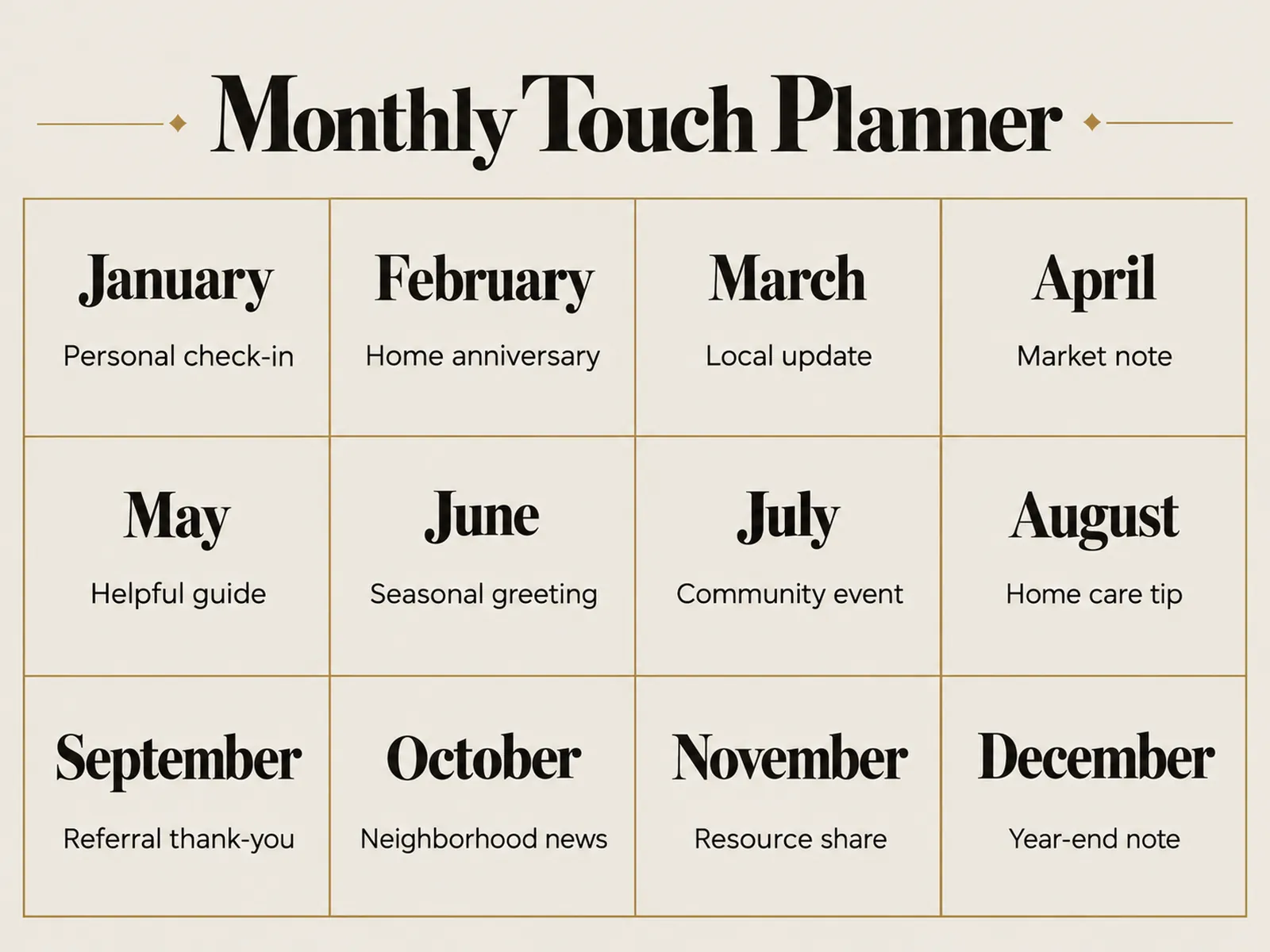
Before sending anything market-related, verify the figures, dates, and boundaries for the local area. If you cannot explain the source, leave the claim out. Avoid treating a broad national trend as a prediction about one person's home.
For social posts, a stage-by-stage guide to real estate social media posts can help you choose an asset that fits a listing moment. A post can support a relationship, but it does not replace a direct conversation with someone who knows you.
What Actually Makes the Plan Sustainable?
The reason for each touch is what makes the calendar useful. It can remind you to send something, while the relationship note helps you decide whether that message belongs in the person's inbox.
- Start with the person. Use the detail they shared or the context you already have. Do not force every contact into a real estate topic.
- Choose one useful point. A short local update is easier to read than a long roundup of every market headline.
This delivered Canva template shows a sample buying tip. Verify it and replace the personal and contact placeholders before sharing.

- Make a clear offer. If you are sharing a resource, say what it covers. Do not imply that one message will generate a lead or a transaction.
- Leave room for no response. A check-in is not a demand for a reply. If someone declines or asks you to stop, respect that.
- Review the list. Remove outdated details and fix mistakes. A list that stays accurate is more useful than one that grows without review.
The National Association of REALTORS® article on building relationships with buyers and leads centers conversations and listening. That is a sensible standard for sphere outreach too: speak to the person, not to a contact segment.
If a monthly touch is hard to plan, reduce the schedule until it fits the week you actually have. The open house ideas guide has examples of posts tied to one clear event. The real estate hashtag guide can help when a social update needs a small, relevant set of tags.
Why Trust This Article
Realtor Marketing Kit by Cosmo Suite publishes practical marketing guidance for real estate agents. The source list names the industry pages consulted for this article; vendor pages are not independent research, so their product claims are not repeated as universal results. The contact list and monthly plan here are editorial examples, not findings from a survey or a tested campaign. This article does not offer legal advice. Check your brokerage policy before storing or contacting people in a marketing list.
Where Realtor Marketing Kit Fits
Realtor Marketing Kit is our product. Its materials include an email marketing template kit, 200+ subject lines, a 30-day list-building playbook, a weekly content calendar, and social designs such as a market updates template for Instagram. The kit can help prepare marketing materials. It is not a CRM, contact database, lead-generation service, or posting scheduler.
This Instagram template has sample location and market figures. Replace them with current, verified local data.
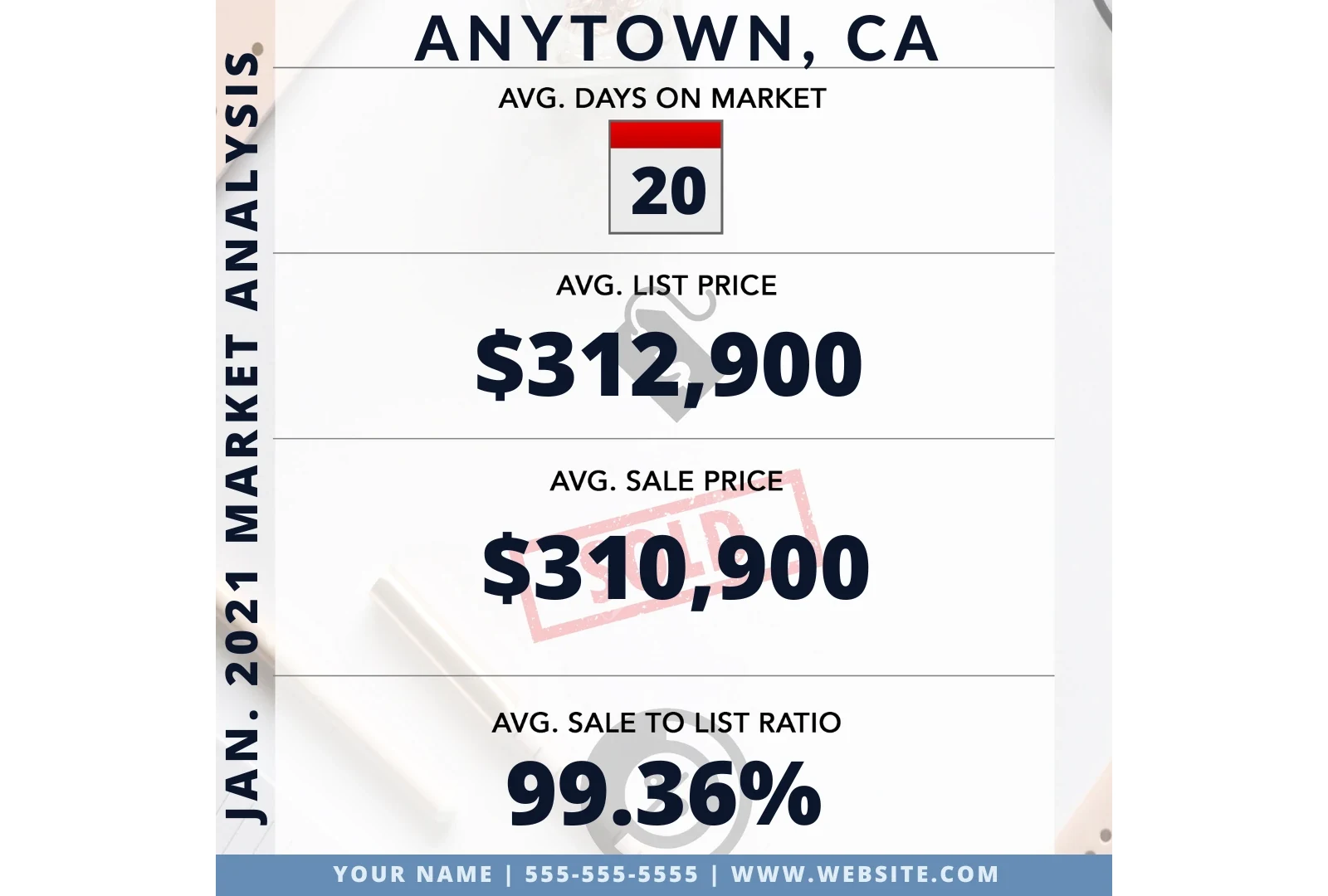
If you want prepared social and email materials alongside your own contact plan, Realtor Marketing Kit's Canva templates for real estate agents are available as a one-time kit. Use your brokerage-approved system to manage the list and the follow-up.
Frequently asked questions
What is a sphere of influence in real estate?
A real estate sphere of influence is the people you already know through family, friends, work, community, past clients, and professional relationships. It is a relationship list, not a list of people who agreed to receive every kind of marketing.
How do I build my real estate sphere of influence list?
Start with people whose names you can recall without searching: family, friends, current and past colleagues, neighbors, community contacts, and clients who agreed to stay in touch. Add a next step only when it is appropriate for that relationship.
How often should a real estate agent contact their sphere?
Choose a pace you can keep and match the message to the relationship. A useful market note or a personal check-in can feel more natural than a sales ask on a fixed schedule.
What should I send to my sphere of influence?
Send something useful or personal: a local market explanation, a home-maintenance reminder, a community event note, or a direct check-in. Make sure any property or market detail is current and relevant to the person receiving it.
Is a sphere of influence the same as a lead list?
No. A sphere is built from existing relationships. A lead list may contain people you do not know. Keep the source, relationship, and permissions for each contact clear, and follow your brokerage's policies for outreach.
